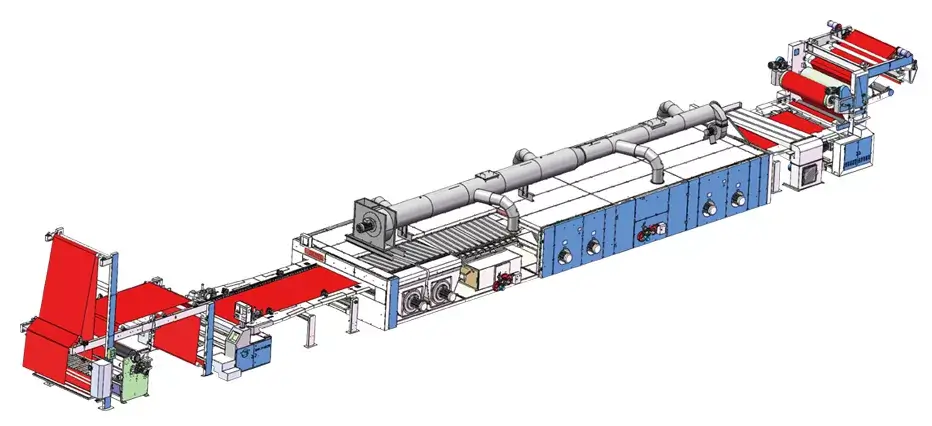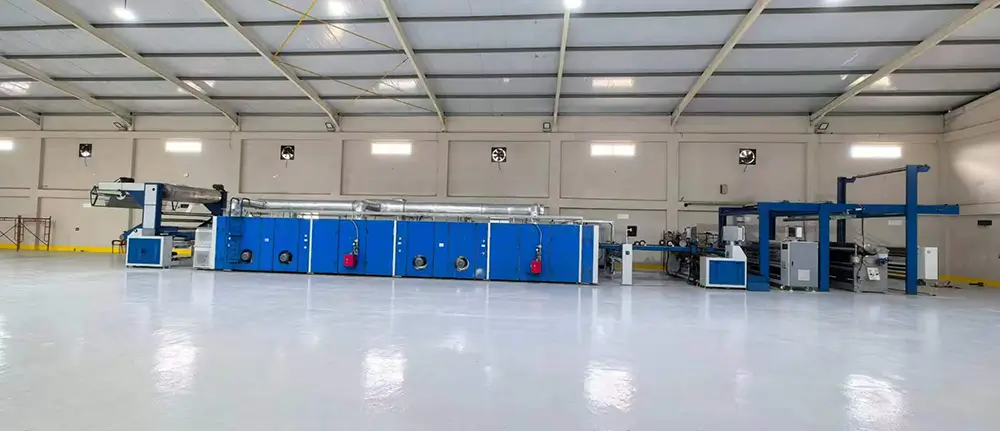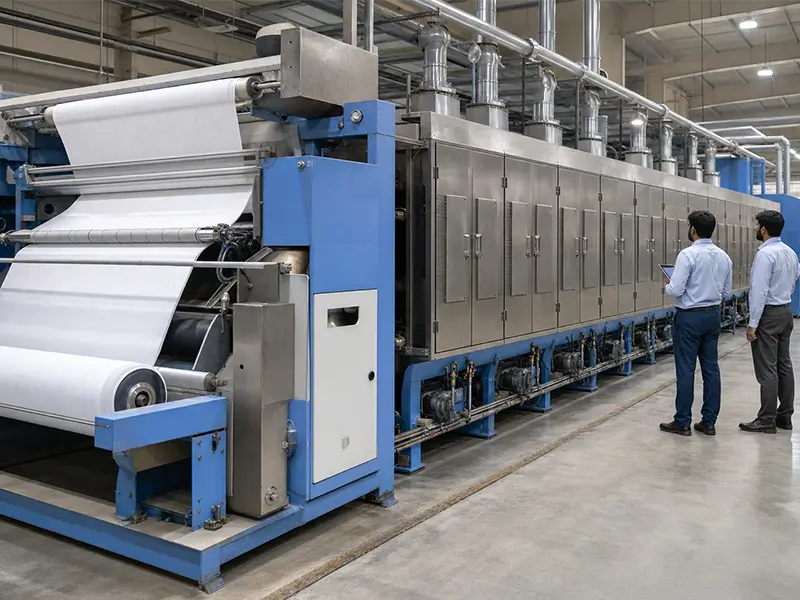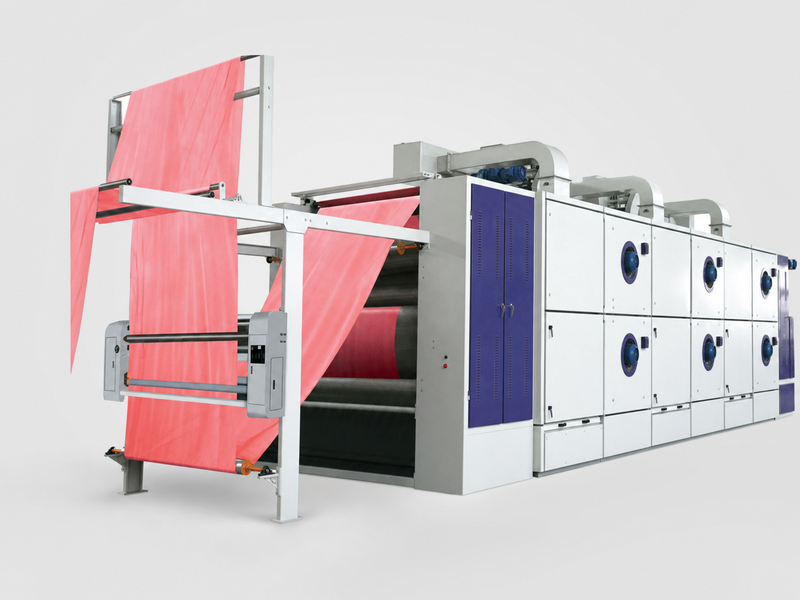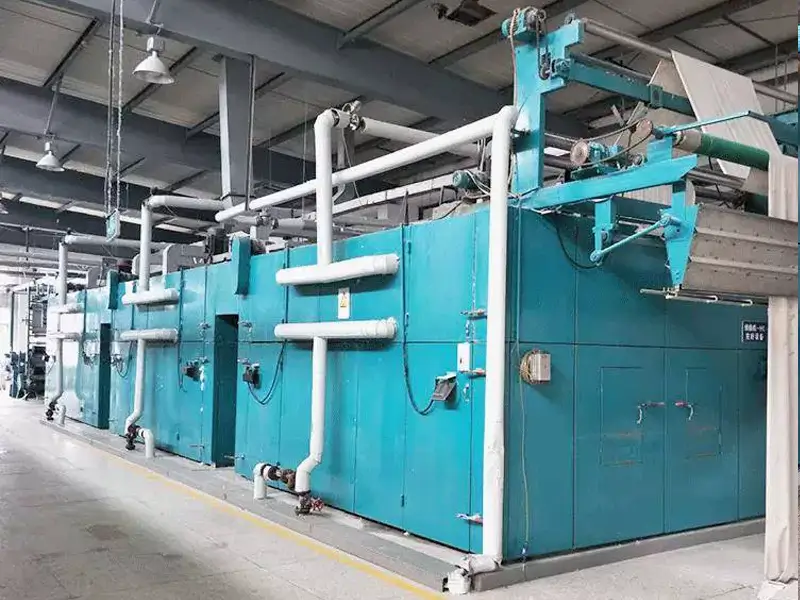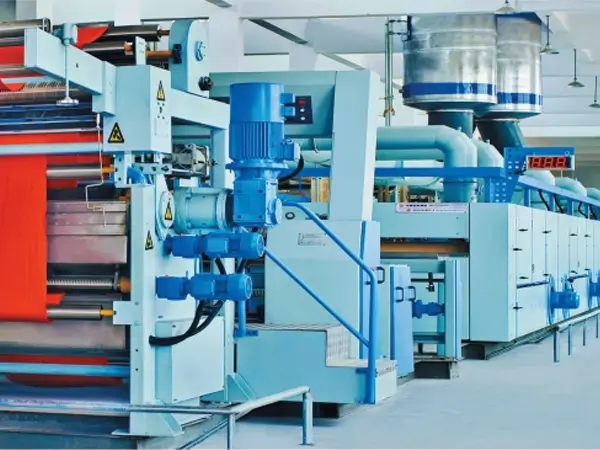
In modern textile finishing production, stenter machines are indispensable for fabric stretching, heat setting, and dimensional stabilization. However, traditional stenter equipment usually comes with high energy consumption, serious heat loss, and low thermal utilization efficiency, which greatly increases factory operating costs. The Happy Stenter Machine is engineered with advanced energy-saving structures and precise intelligent control systems, balancing high-precision fabric shaping and low-carbon production. This blog mainly explores its core energy-saving advantages and shares a standardized full-cycle maintenance guide to help textile enterprises cut energy costs, reduce failure downtime, and achieve efficient and green production.
What Is a Happy Stenter Machine?
The Happy Stenter Machine is a professional high-efficiency fabric heat-setting and stretching equipment, widely used for knitted, woven, and blended fabric finishing. Different from conventional stenters with single heating mode and high energy loss, it integrates optimized hot air circulation, waste heat recovery, and frequency conversion speed regulation technology. It can precisely adjust fabric width, tension, and setting temperature, delivering stable shaping quality while significantly reducing power and heat energy consumption, making it an ideal energy-saving equipment for modern textile factories.
Core Energy-Saving Features of Happy Stenter Machine
-
Efficient Waste Heat Recovery System, Greatly Reduce Heat Loss
Equipped with an independent high-efficiency flue gas waste heat recovery device, the Happy Stenter Machine is the biggest highlight of its energy-saving performance. The equipment can recycle high-temperature waste heat generated during the heat-setting process, and reuse the recovered heat to preheat fresh cold air entering the oven. This cycle effectively avoids massive heat waste caused by direct exhaust of high-temperature flue gas. Practical industrial verification shows that this waste heat recycling system can reduce overall heat energy consumption by nearly 30%, drastically cutting gas or steam costs for long-term production.
-
Optimized Sealed Oven Structure & Uniform Hot Air Circulation
Traditional stenter ovens have poor airtightness, leading to serious heat leakage and uneven internal temperature. The Happy Stenter Machine adopts an enhanced fully sealed oven body and multi-layer heat insulation structure, which effectively locks internal heat and minimizes heat conduction loss. Meanwhile, it is equipped with upgraded cross-flow hot air circulation fans and symmetric air nozzles, realizing 360° uniform hot air circulation inside the oven. The consistent temperature field avoids repeated heating caused by local temperature deviation, improves thermal energy utilization efficiency, and ensures no color difference or uneven setting on fabrics.
-
Intelligent Frequency Conversion Speed Regulation, Low Power Consumption Operation
All driving motors and fan motors of the Happy Stenter Machine adopt energy-saving frequency conversion control systems. The equipment can automatically adjust operating speed, air volume, and power output according to different fabric thickness, grammage, and production speed. It avoids the constant high-power operation defect of traditional fixed-speed motors, effectively reducing invalid power consumption during low-load production. In addition, the intelligent standby energy-saving mode will automatically reduce power consumption during equipment idling, further saving daily electric energy costs for factories.
- Precise Constant Temperature Control, Avoid Over-Heating Energy Waste
Fitted with high-sensitivity infrared temperature sensors and intelligent PLC temperature control system, the Happy Stenter Machine realizes real-time monitoring and precise adjustment of oven temperature. The system can accurately lock the optimal setting temperature for different fabrics, effectively preventing energy waste caused by excessive temperature setting and repeated heating. Compared with traditional mechanical temperature control stenters, its temperature control accuracy is improved by more than 95%, which not only ensures high-standard fabric shaping quality but also avoids unnecessary energy loss.
- Low Friction Transmission Design, Reduce Mechanical Energy Consumption
The whole transmission system of the machine adopts optimized low-resistance chain and guide rail structure, with high-precision wear-resistant accessories. It reduces friction resistance during equipment operation, lowers mechanical loss and invalid power consumption caused by friction. The stable and efficient transmission system ensures smooth equipment operation, reduces load pressure on the motor, and realizes energy-saving and low-noise operation while maintaining high production efficiency.、
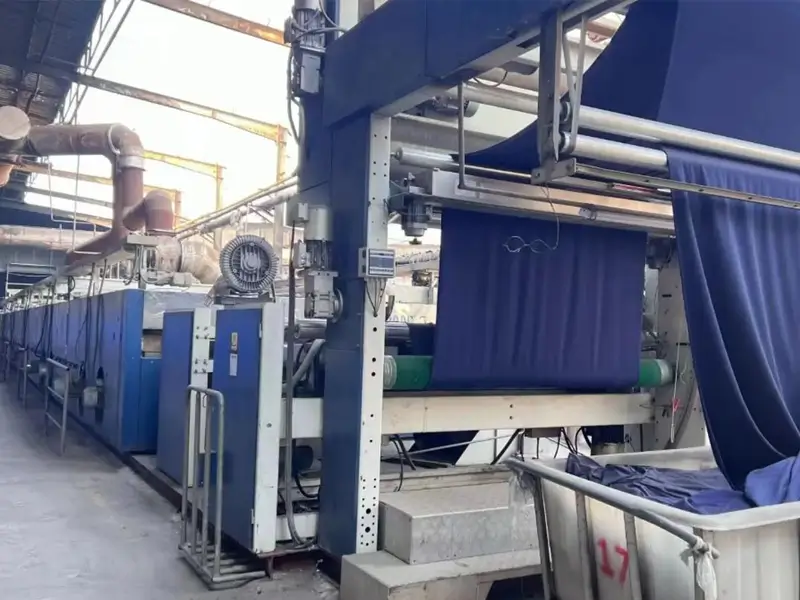
Complete Maintenance Steps for Happy Stenter Machine (Daily & Regular)
Scientific and standardized maintenance is the key to maintaining the long-term energy-saving performance and stable operation of the Happy Stenter Machine. Poor daily maintenance will lead to blocked air ducts, reduced heat exchange efficiency, and increased equipment load, resulting in rising energy consumption and frequent failures. We have sorted out a complete set of hierarchical maintenance procedures suitable for industrial continuous production.
- Daily Shift Maintenance (Every Working Day)
First, thoroughly clean the equipment residue after each shift. Focus on removing lint, dust, and oil stains on the heat exchanger, filter screen, air nozzle, and oven interior. Blocked filters and air ducts will directly reduce hot air circulation and waste heat recovery efficiency, leading to increased energy consumption. Use compressed air and professional cleaning tools to ensure unobstructed air passages.
Second, inspect real-time operating status. Check whether the transmission chain, needle plate, and clip operate stably without jitter, deviation, or abnormal friction; monitor the operation sound of frequency conversion fans and motors to confirm no abnormal noise or overload operation. Finally, check the oven temperature display system to ensure consistent actual temperature and set temperature, avoiding energy waste and quality problems caused by temperature deviation.
- Weekly In-Depth Cleaning & Inspection
Carry out full internal and external deep cleaning every week. Completely clean the residual oil sludge and fiber debris in the oven, air box, and waste heat recovery device to prevent dirt accumulation from affecting heat transfer efficiency. Wipe the control panel, oven door, and equipment surface to keep the whole machine clean and ensure the tightness of the oven door seal.
Inspect the wearing and tightening status of key components. Check the tension of the transmission chain and conveyor belt, tighten loose screws and fasteners, and replace severely worn needle plates and clips in time. Inspect all air nozzles for blockage to ensure uniform hot air output and stable heat circulation efficiency.
- Monthly Lubrication & Precision Calibration
Perform comprehensive lubrication maintenance on all rotating and transmission parts every month. Fill high-temperature resistant lubricating grease for bearings, transmission shafts, chains, and guide rails to reduce mechanical friction loss, ensure flexible equipment operation, and avoid increased power consumption caused by mechanical resistance. Check the wear degree of sealing strips and heat insulation layers, and replace aging and damaged accessories timely to prevent heat leakage.
In addition, calibrate the temperature control system and tension sensor monthly to ensure accurate temperature monitoring and precise fabric tension control, avoiding energy waste and defective products caused by parameter deviation.
- Quarterly & Annual Professional Overhaul
Every quarter, conduct a systematic inspection of the waste heat recovery system, heating components, and frequency conversion control system. Test the heat exchange efficiency of the heat exchanger, clean the internal flue dirt, and check the operating status of the fan and heating pipe to ensure stable energy-saving performance. Replace the lubricating oil of the gearbox and reducer to keep the transmission system efficient.
Implement a full machine professional overhaul once a year. Arrange professional technicians to detect the insulation performance of heating components, the airtightness of the oven body, and the aging of internal circuits and pipelines. comprehensively eliminate potential hazards such as heat leakage, low heat exchange efficiency, and unstable circuit operation, and restore the equipment’s optimal energy-saving and operating state.
Key Maintenance Notes for Stable Energy-Saving Operation
Cut off the power and heat source completely before all cleaning and maintenance work to avoid safety accidents; never flush electrical control components and frequency conversion devices with water directly.
Avoid long-term overload production with super-thick or over-wet fabrics, which will increase equipment operating load, reduce energy-saving efficiency, and accelerate component wear.
Do not arbitrarily modify the temperature, air volume, and frequency conversion parameters during operation. Set scientific production parameters according to fabric specifications to ensure balanced production efficiency and energy saving.
Regularly sort out and replace vulnerable parts such as filter screens and sealing strips to avoid performance attenuation caused by aging accessories and maintain long-term stable energy-saving effects.
Final Thoughts
The Happy Stenter Machine brings remarkable energy-saving benefits and high-precision shaping effects to textile production relying on waste heat recovery, sealed heat insulation, and intelligent frequency conversion technology. It effectively helps enterprises reduce energy consumption and production costs while improving finished fabric quality. Scientific and standardized daily maintenance is the core premise to sustain its energy-saving performance and extend equipment service life. By following the above complete maintenance steps, factories can always keep the equipment in an efficient and low-consumption operating state and maximize production economic benefits.
Stay tuned for more professional operation skills, parameter setting tutorials, and energy-saving optimization schemes for the Happy Stenter Machine!