- Jiangsu
- + 86 13605261217
- saleslucy001@gmail.com

Calendering machine, a finishing process that utilizes the plasticity of fibers under mixed heat conditions to flatten fabric surfaces or emboss them with parallel, fine diagonal lines, thereby enhancing fabric luster. The calender significantly improves the state of raw materials during the pre-carding process. Simultaneously, during normal spinning, the material undergoes re-carding, increasing the number of carding passes and substantially reducing the quantity of wool particles.
1. Increase fabric density;
2. Enhance fabric softness;
3. Improve fabric luster;
4. Enhance fabric flatness.
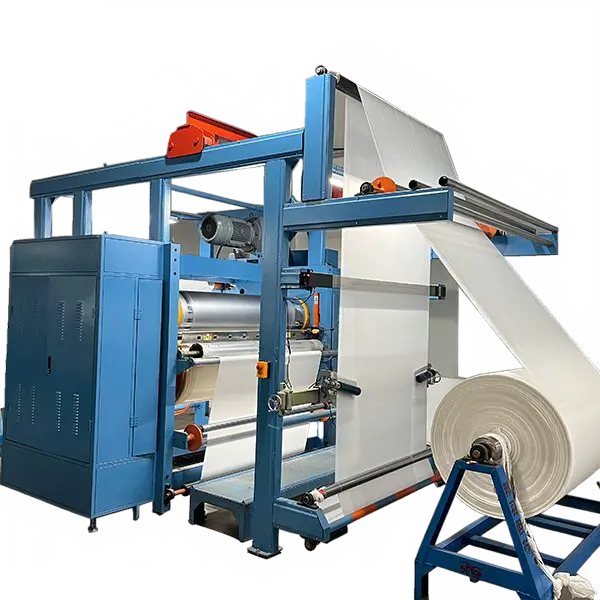
The two-roll calendering machine primarily combines a mirror-finish roll with a nylon roll to achieve a single-sided calendering effect in a single pass through the calendering zone. This process imparts a smooth, glossy, and soft finish to one side of the fabric. With high calendering efficiency, it enables customers to achieve energy savings, emission reduction, and time-efficient production.
This product is primarily used for calendering and finishing cotton fabrics, synthetic fabrics, linen fabrics, wool fabrics, and their blended textiles. It is also suitable for calendering processing of building materials, plastic packaging materials, and paper products.
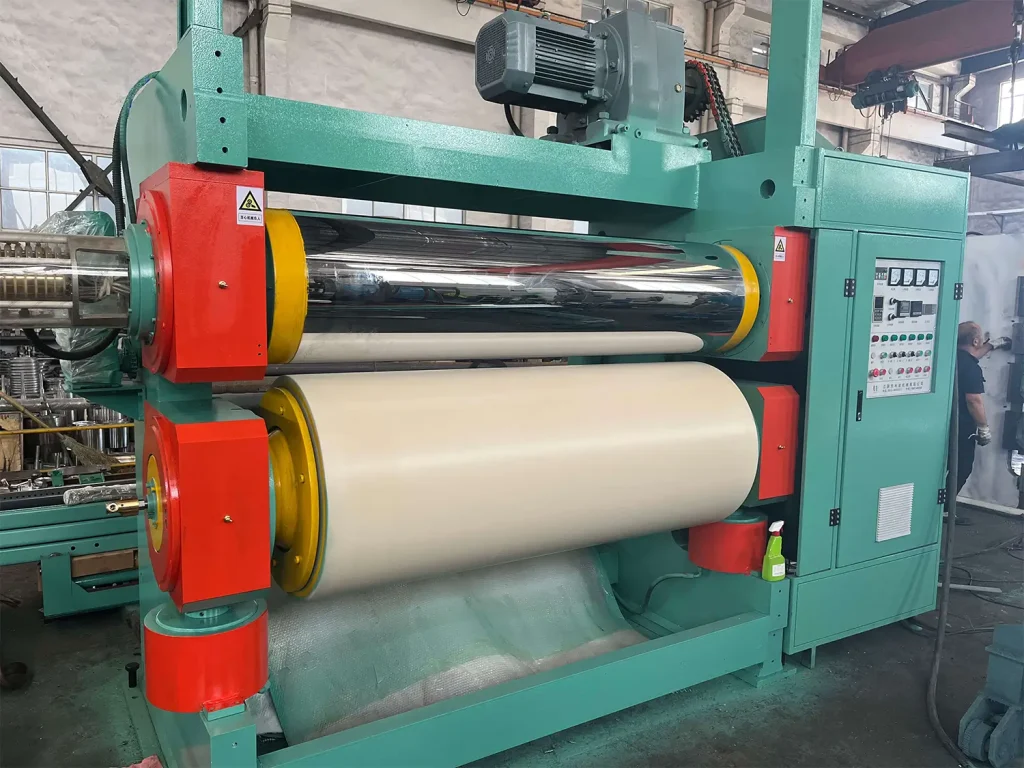
Reliably Uniform and Accurate Temperature Control:
The calendering machine employs a sophisticated roller surface management system which facilitates uniform heat distribution and accurate temperature control without damaging the textile. This enables the machine to achieve high quality and consistent finishing of diverse materials and thicknesses.
Adjustable Pressure Application System:
The machine is designed with an adjustable pressure application system which provides the operator the ease to configure a specific pressure value for different fabric properties. Such features to the machine improves the adaptability to processing, operational productivity, and minimizes material loss while providing optimal efficiency in every operation.
Automated Control System:
The calendering machine is designed with an efficient automated control system that is intended to decrease manual control of the machine, and consequently, operational errors. This automated control system increases the operational safety and stability of the machine.
Solid and Long Lasting Construction:
The calendering machine incorporates high strength and rigid engineering materials with accurate design. This combination guarantees reliability and stability in service for long time meaning that the machine requires less frequent maintenance which is cost efficient for the user.
Design that Conserves Resources and Protects the Environment:
Fabric Calendering Machine
1) Main Frame Assembly
Structure: The central frame is made up of two heavy-duty side wall plates, spanned with cross connecting beams and with a pressure screw assembly.
Material: Constructed out of Q235A grade steel, with a wall thickness of 60mm. The connecting beams are welded steel structures, sandblasting and tempering is used to relieve internal stress and ensure full rigidity and stability in operation.
2) Roller System
Embossing Roller: Diameter of 400mm. The surface patterns are custom made and engraved made to the client’s fabric samples or design specifications. The frame has a fixed mounted bearing housing.
Rubber Roller: Also 400mm in diameter, made of natural colored EPDM (Ethylene Propylene Diene Monomer) rubber with a shore hardness of 90±2. The frame’s housing has a design for unrestricted up and down vertical bearing movement.
Bearings: Each of the rollers are equipped with Wafangdian brand 22318CA/W33 model bearings which are lubricated with grease.
Accessory: One set of stainless steel water channels are included.
3) Transmission System
Drive: 15kW inverter motor. Torque is transferred by a surface reducer with a hardened and high strength gear and a strong and stable operating coupler.
4) Pressurization System
Mechanism: There are two motorized lift units, each with a 10-ton motor. This system allows masterful, motorized pressure control to be applied gently, gradually, and uniformly.
5) Electrical Control System
Core Software: Runs on a proprietary, in-house developed control system software (Ver. 3.0).
Branded Components:
PLC (Programmable Logic Controller) is a SIEMENS part
HMI (Human-Machine Interface) is a SIEMENS Touch Screen
Inverter is a SIEMENS part, and provides precise motor speed control. It is possible to configure it with upstream equipment (like a spunlace dryer) for either paired or standalone operation.
Main Electrical Parts Schneider
6) Safety Devices
Device incorporates a finger anti-pinch protection feature at the roller entry.
Pull cord switches for emergency stops along the machine are integrated to enable emergency shutdown from any location.
7) Utility & Environmental Requirements
Main Voltage: 380V AC, 3 Phase, 50Hz
Control Voltage: 220V AC / 24V DC (for PLC, valves, etc.)
Instrument Air Pressure: 6 bar (minimum)
Machine Operating Temperature: 10-40 degrees Celsius
Control Cabinet Ambient Humidity: 30 to 60 percent
8) Interface & Connection Layout
Orientation: The transmission system is on the left from the product entry, front of the machine.
Connections: The location of all utility connection points (thermal oil, water, air, and electricity) makes it easy to access the top of the machine premises.
9) Description of the Component Materials
Hydraulic and Lubricant Tanks: Steel sheet with protective coating
Hydraulic Tubing: Steel with galvanized coating or painted finish
Pneumatic Hoses: Industry-grade plastic
| Technical Parameters | Specification Range | Notes |
|---|---|---|
| Equipment Type | Two-Roll Vertical Fixed Crown Soft Calendering Machine | Standard Configuration |
| Working Width | 1600mm - 6000mm | Customizable |
| Operating Speed | 5 - 300 m/min | Variable Frequency Drive |
| Maximum Pressure | 10T - 150T | Hydraulic Control |
| Working Temperature | Max 250°C | Precise Control |
| Roll Configuration | Mirror Heated Roll + Nylon/Wool Paper/Cotton/Rubber Soft Roll | Multiple Options |
| Automation Level | Fully Automatic Control System | PLC Control |
A calendering machine is one of the most versatile finishing machines when it comes to adding value to the fabric. The primary function of this machine is to put a controlled amount of heat and pressure to achieve the effects of:
Our calendering machines are built with versatility in mind and can work with a variety of fabrics, including natural fabrics like cotton and linen, synthetics like polyester and nylon, and a variety of other blended fabrics. The machines’ settings including, temperature, pressure, and speed, can be adjusted to suit a specific fabric to achieve the most accurate results without harming the fabric.
Our company philosophy at Happy Textile Equipment, and specifically with calendering machines, is to bring efficiency to the forefront. There are two primary ways a machine can help lower operating expenses. First, the heating element, be it thermal oil or electric, is designed to be up to 20% more energy efficient than other products on the market which decreases energy costs due to lower consumption. Secondly, the downtime on calendering machines is decreased due to lower quality output and is minimised by using precision engineered rollers and a strong drive system, reducing the overall waste of the fabric and increasing the overall output efficiency.
The purpose of both standard calendering and embossing is to finish the fabric prior to fabrication. However, both processes apply heat, and both apply pressure through rollers, but the rollers are different and serve different purposes. Calendering uses smooth rollers to polish the fabric to a finish in order to achieve a uniform gloss and smoothness across the surface. Embossing, however, uses an engraved heat roller that, along with pressure from a soft roller, create a permanent, three-dimensional pattern on the fabric surface. The decorative effects from embossing can be of a moire, faux leather, or various other intricate designs. We can finish fabrics in both ways.
The most important preventative maintenance that should be performed to keep the calendering machine in top condition is the following:
Roller Maintenance: The surfaces of the rollers should be clean with no scratches or other surface wear that can cause damage to the fabric.
Lubrication: All moving parts (bearings, drives, etc.) should be lubricated in accordance with the service manual.
Heat Checks: The heating elements and the systems that control the temperature should be verified for proper functioning and safety.
Hydraulic Checks: The hydraulic (or pneumatic) pressure should be verified for constancy and correctness.
Happy Textile Equipment is able to provide specific service plans and detailed technical documentation to assist you in keeping your machinery in excellent working order.
We will contact you within 1 working day, please pay attention to the email with the suffix “@gmail.com”.